
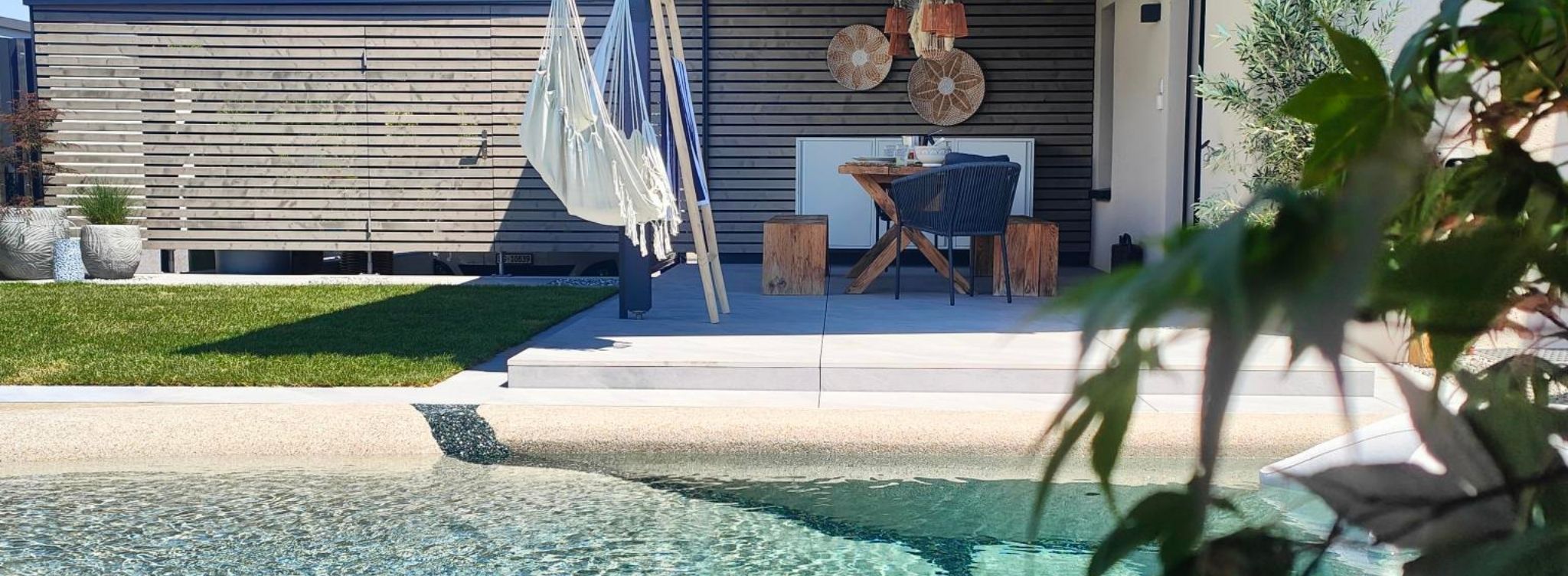
Hotter and hotter summers: how to design your pool and outdoor space for better outdoor living
Summers are changing, and summer 2026 was further proof of this. Longer periods of heat, high temperatures even in the evening, soaring humidity and irregular rainfall are changing not only our habits, but also the way we design our homes and gardens.
This summer, according to the Copernicus Climate Change Service, Western Europe experienced the hottest June–July period in Copernicus records dating back to 1940, with an average temperature of 21.62°C, 2.79°C above the 1991–2020 average.
Globally, July 2026 was also the second-hottest July ever recorded, tied with 2024.
However, conditions across Europe were not uniform. While Eastern Europe and parts of Scandinavia experienced cooler conditions, the heat was particularly persistent in Western Europe. In France, Germany, north-eastern Spain, Switzerland and also western Italy, temperatures in several areas were 3–5°C above average in July.
Heat and climate change: what do we really know?
A single summer or heatwave cannot be explained solely by climate change: temperatures are also influenced by atmospheric circulation and natural variability.
However, the long-term picture is clear. The World Health Organization stresses that extreme heat is becoming a growing risk in Europe, amplified by climate change and, in cities, by urbanisation.
In 2026, Copernicus also highlighted persistent high-pressure conditions over Western Europe, capable of trapping heat and favouring prolonged periods of hot, dry weather. High temperatures, in turn, accelerated the loss of moisture from soil and vegetation, reducing some of the natural cooling provided by evapotranspiration.
This scenario leads to a very practical consideration: the way we design outdoor spaces must evolve too.
From the pool to the entire outdoor project
As temperatures rise, the way we experience our gardens also changes. During the hottest hours of the day, the comfort of an outdoor space does not depend on a single element, but on the balance between water, shade, vegetation and surfaces.
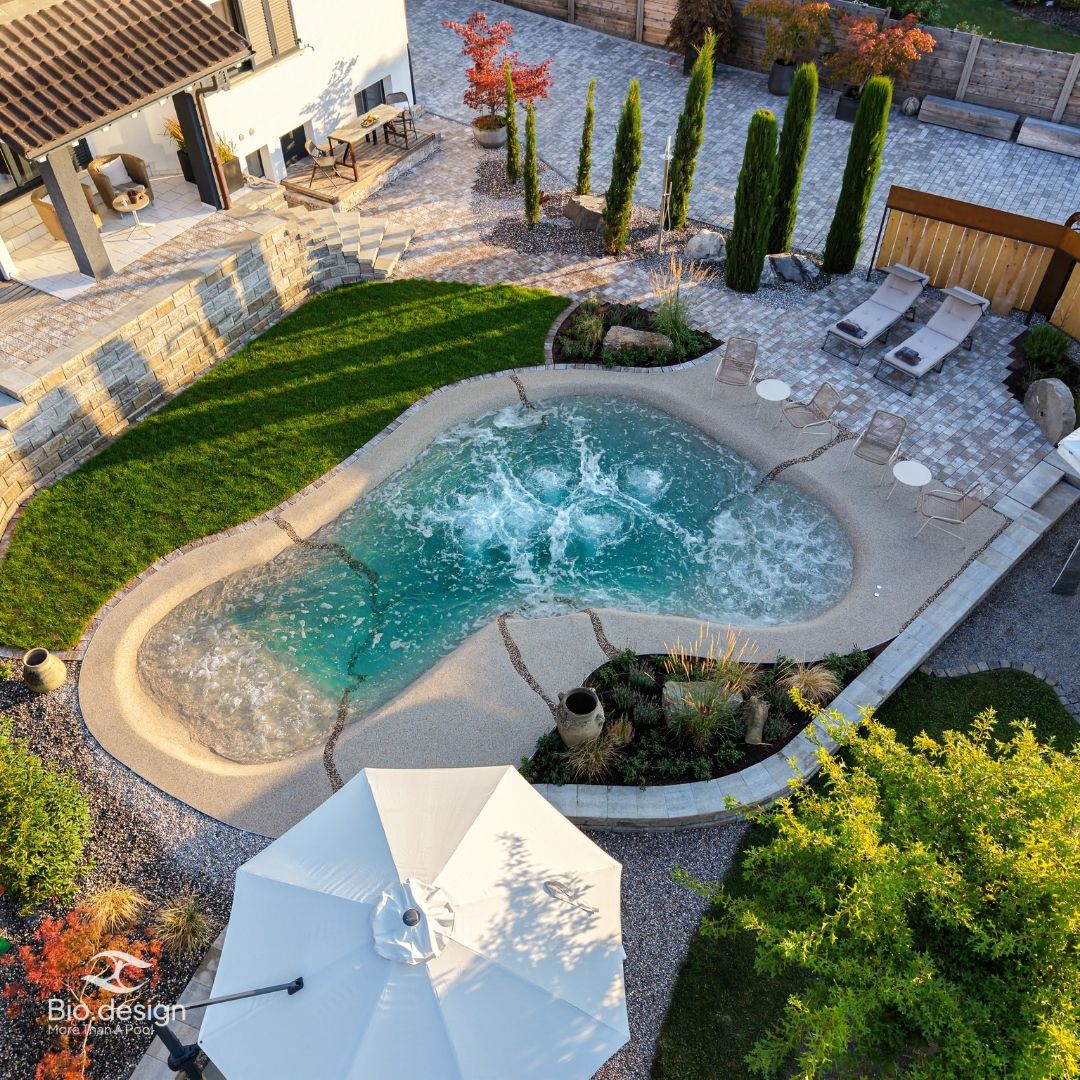
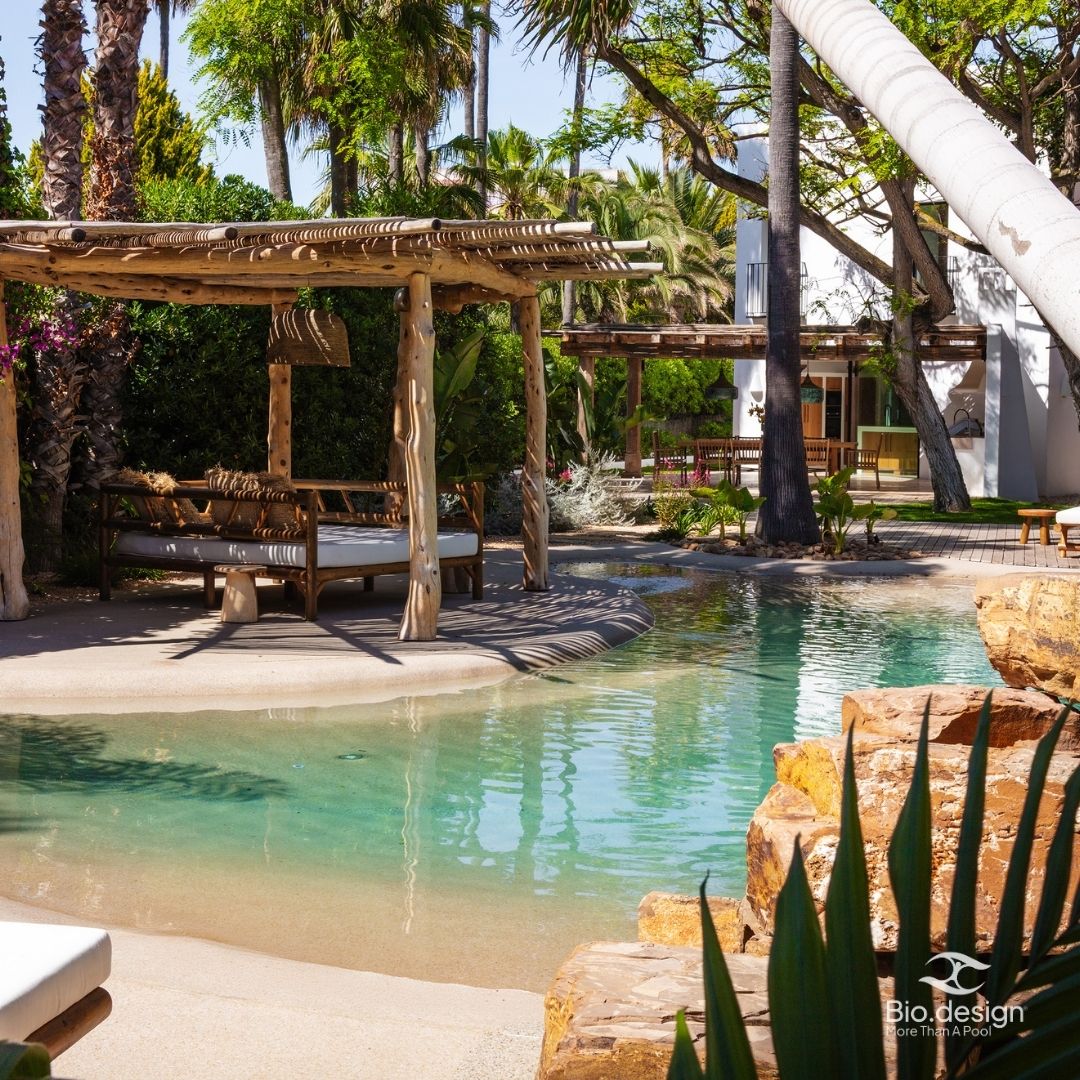
In this context, a Bio.design beach pool can become the heart of a broader outdoor project, providing a focal point around which to organise shaded areas, relaxation spaces and vegetation, creating different environments to enjoy throughout the day.
The design of Bio.design beach pools starts precisely from the relationship between the pool and the surrounding landscape. Customisable shapes, beach entries and geometries that follow the characteristics of the terrain make it possible to integrate the water naturally into the garden and design the surrounding spaces as part of the same project.
The goal is therefore not simply to “add a pool” to the garden, but to create an outdoor environment that is consistent with the location, the needs of those who use it and the climatic conditions of its surroundings.
Shade: the first element to design
On the hottest days, having a body of water is not enough: it is essential to be able to alternate between sun exposure and sheltered areas.
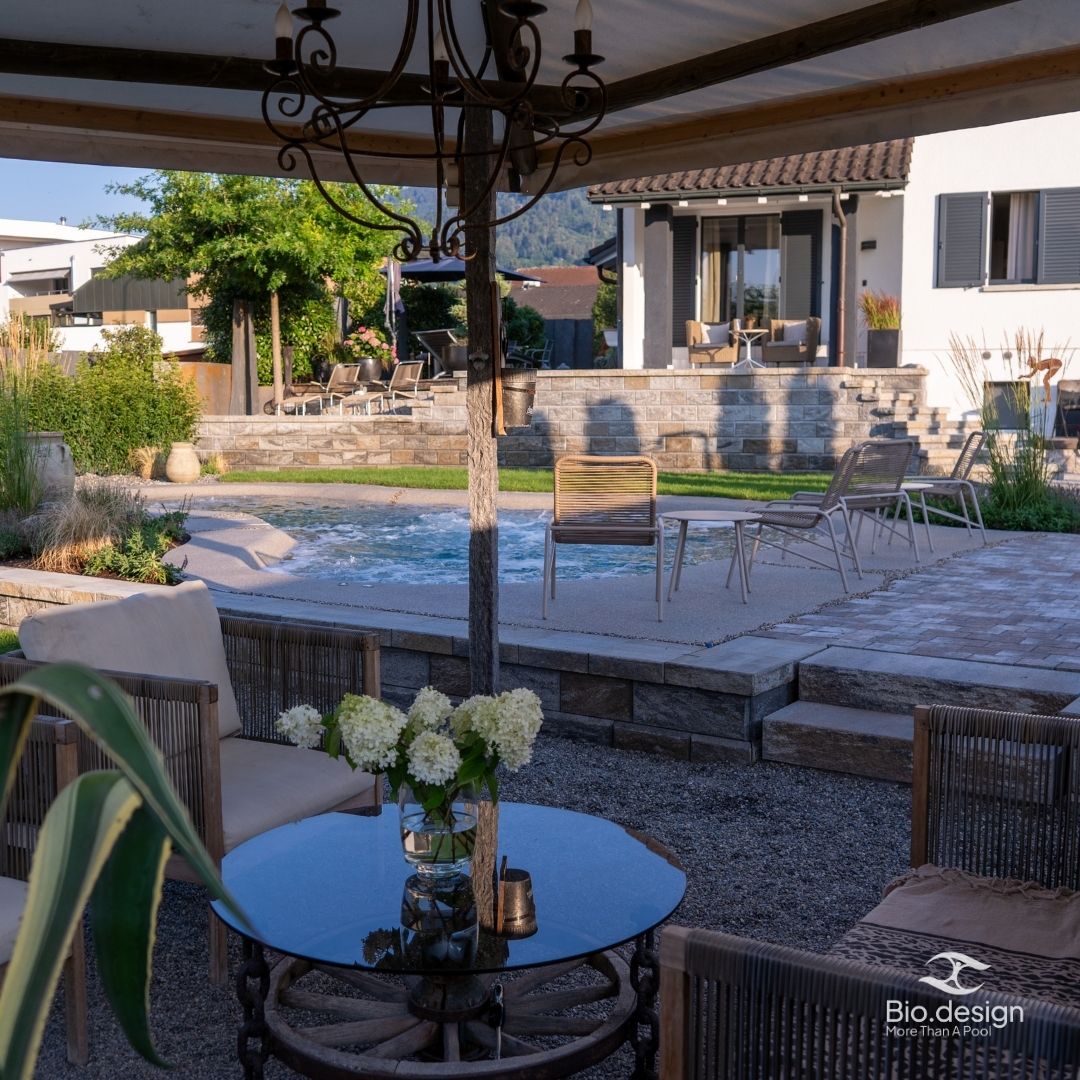
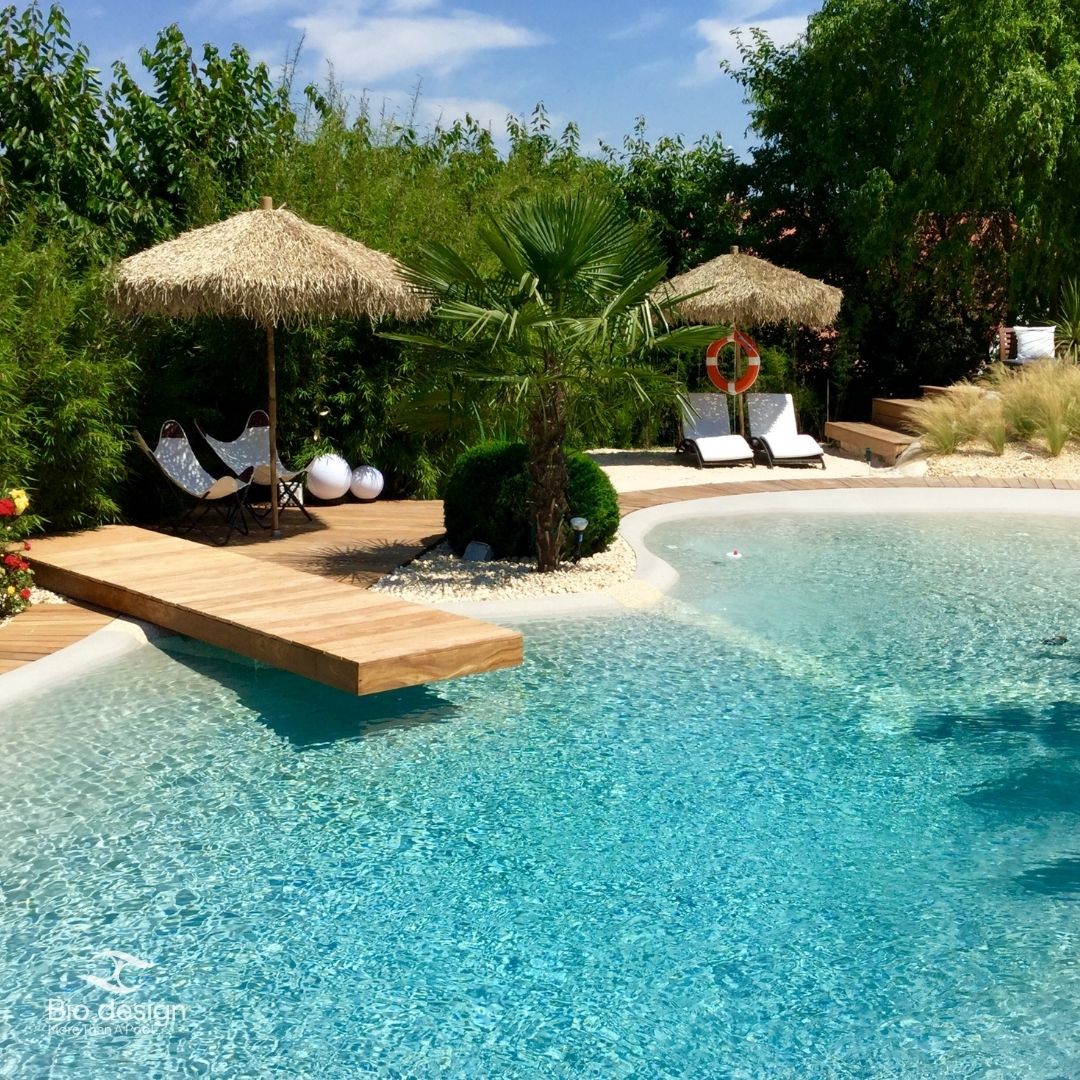
Pergolas, shade sails, covered terraces, gazebos and, above all, carefully positioned trees can create more comfortable areas around the pool.
The WHO notes that during heatwaves, the perceived temperature in direct sunlight can be 10–15°C higher than in the shade.
For this reason, sun loungers, dining areas and conversation spaces should be designed by considering the position of the sun at different times of the day, rather than focusing solely on the overall aesthetics.
More greenery, fewer heat-absorbing surfaces
When designing the space around a pool, it is important to consider not only the water itself, but also how the surrounding environment behaves during the hottest hours of the day. Large paved areas, particularly when dark and constantly exposed to the sun, can overheat and make spending time outdoors less comfortable.
Alternating paved surfaces with vegetation, flower beds and trees helps create a more balanced environment. Plants provide shade and, through evapotranspiration, naturally contribute to cooling the surrounding air. It is no coincidence that increasing greenery is among the strategies recommended by international organisations to mitigate the effects of high temperatures.
However, this does not mean increasing water consumption indiscriminately. Choosing local or climate-appropriate species that are drought-resistant and require little irrigation makes it possible to design a garden that is better adapted to local climatic conditions. Likewise, limiting large dark surfaces where possible and selecting materials and colours according to sun exposure can make the area around the pool more enjoyable even during the hottest months.
Water management can also be more sustainable: discover how a Bio.design beach pool helps optimise water consumption and maintenance over time.
A garden designed to be lived in
Changing climatic conditions are therefore also influencing the concept of outdoor living.
A pool designed together with the landscape can become part of a broader system: water for cooling off, trees for shade, vegetation to create a more natural environment, carefully selected surfaces and relaxation areas that can be enjoyed at different times of the day.
More realistically, it is about designing the spaces we live in while taking a changing climate into account.
And it is precisely within this integrated vision that the beach pool can take on a new role: no longer simply a space for swimming, but the heart of an outdoor environment designed to offer well-being, contact with nature and a better quality of outdoor living.

